

FOR IN-HOUSE LEGAL TEAMS
The Legal Operating Layer
for In-House Legal
An evidence-based management system for Legal. Manage demand, capacity and risk across your teams and systems, without adding headcount.
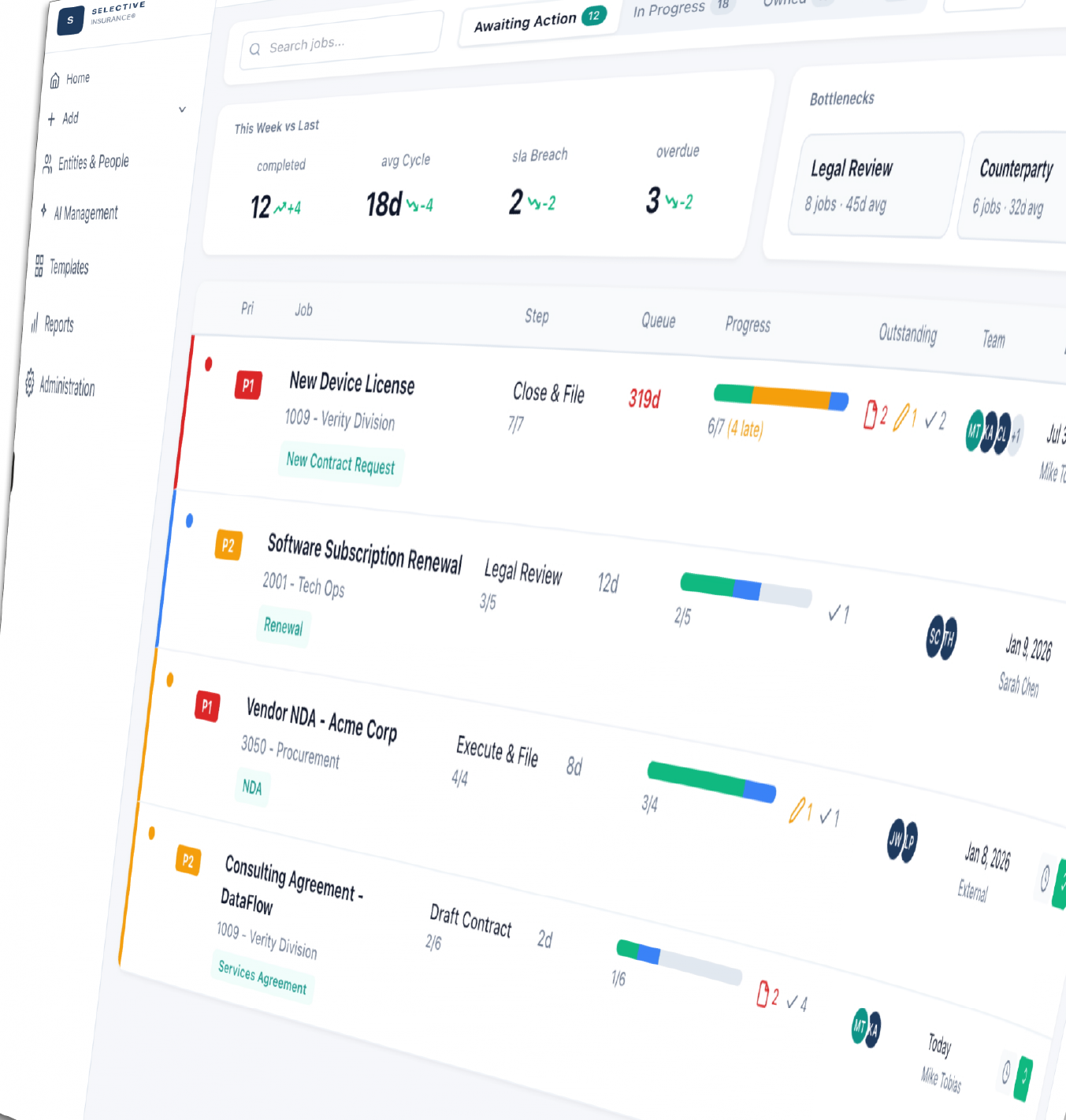
Corporate Legal Isn’t Overwhelmed. It’s Overrun.
• Work arrives faster than it can be triaged
• Priority is assigned emotionally, not operationally
• Lawyers manage work instead of doing it
• Leadership asks for insight Legal can’t produce easily
None of this is a talent problem. It's an operating problem.
Why Reactive Corporate Legal Breaks, and What Replaces It
These approaches can manage pieces of in-house work. None of them manage Legal as one operation.

Inbox-driven Legal: reactive, opaque, and hard to scale
Intake-only fixes: structure at the front door, nothing after it
Point solutions: each improves its own task; together they add more to keep in sync.
More people: expensive, slow, and still unstructured
The issue isn't the tools. It's running Legal from separate pieces.
The Operating Model for Corporate Legal
mot-r is the Legal Operating Layer: an evidence-based management system across demand, priorities, capacity, workflows, decisions, risk, AI governance and continuous improvement.

Demand arrives structured. Business requests arrive complete, categorized and ready for action.
Work reaches the right people. Routing reflects skills, risk levels and current capacity, so lawyers spend their time on legal work rather than managing the queue.
Leadership sees the operation. Capacity, bottlenecks, risk and performance are visible as the work happens, without manual reporting.
Staying effective as the business changes depends on learning from the work and acting on what it shows.
Built to Learn and Adapt
Coordinating work is the start. Staying aligned as the business changes means learning from the work, acting on it, and keeping that ability as the technology underneath changes.
The work creates the evidence.
Decisions, responsibility, risk, approvals, AI activity and change are recorded where the work happens, so Legal can learn from how the operation is actually performing.
Legal can act on what it learns.
A reorganization, a new approval rule, a change in who owns what, a new workflow: the Legal team can change these without another IT or development project.
The operation is independent of the technology underneath it.
Run across more than one DMS. Change AI providers. Replace an underlying system. The way Legal works, and its operational history, carry on without a rebuild.
Legal Doesn't Operate Inside Its DMS. Neither Should Its Operating Layer.
Legal work involves Finance, HR, Procurement, Privacy, InfoSec, outside counsel and vendors. They submit requests, provide input, give approvals and receive answers through mot-r without becoming users of Legal's document management system. Documents stay in your DMS. The work, and the record of it, stays coordinated.
Comparing Approaches to Corporate Legal Operations
Most legal departments already run some mix of the first two. The question is which approach keeps the whole operation coordinated as things change.
| Capability | Disconnected point solutions | Traditional administrative ELM | Legal Operating Layer |
|---|---|---|---|
| Structured legal intake | Partial | Limited | Built in |
| Coordinated work across roles and functions | Fragmented | Partial | Yes |
| Workload and capacity visibility | Limited | Partial | Yes |
| Department-wide reporting | Manual | Partial | From the work itself |
| Evidence recorded as work happens | Varies by tool | Partial | Across work, systems and participants |
| Changes configured by Legal Ops | Limited | Often vendor-dependent | Yes |
| Works across multiple DMS platforms | Varies | Often tied to one | Yes |
| Choice of AI provider | Varies | Limited | Yes |
| Operational history survives system changes | Rarely | Varies | Yes |
The difference isn't any single feature. It's coherent operational evidence across work, systems, participants and change over time, combined with Legal's ability to act on what it learns.
What mot-r Covers
The capabilities you'd expect from ELM, run as one coordinated operation.
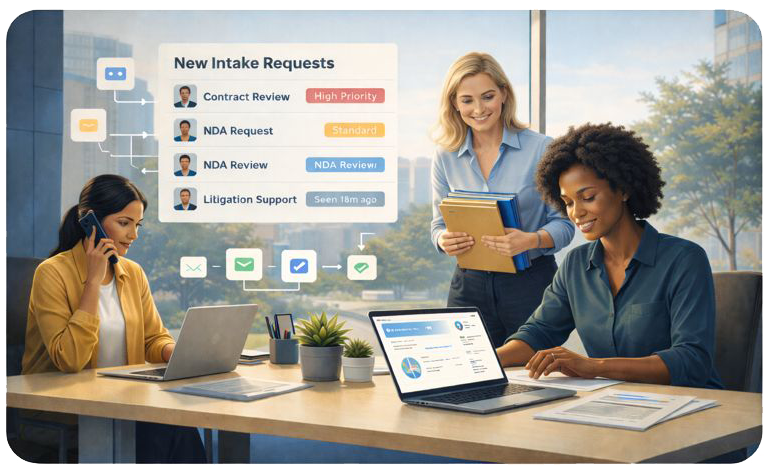
• Self-Service Requests: the business asks for help in one place, with the details Legal needs
• Intake & Triage: requests arrive complete and reach the right people

• Workflows: multi-step work stays coordinated across teams and stakeholders
• Reporting: live views of demand, capacity, cycle time and performance
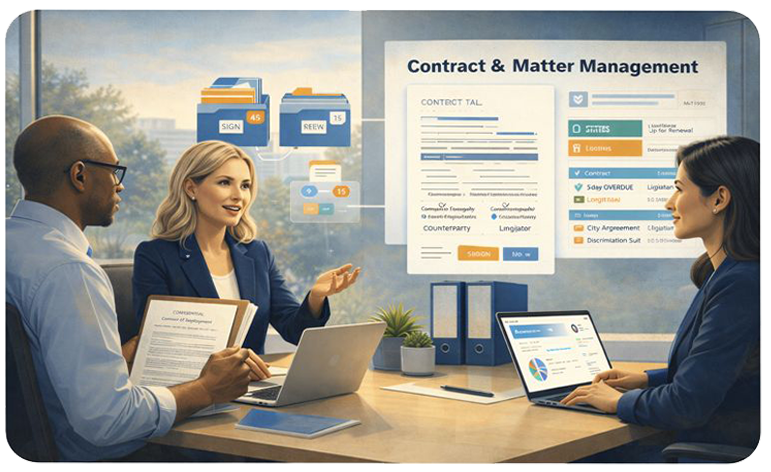
• Contracts: drafting, negotiation, execution and renewal in one process
• Matters: every matter visible from open to close
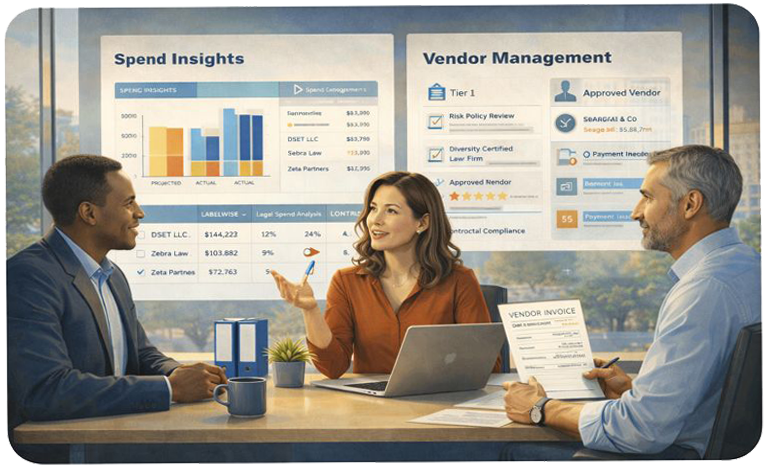
• Spend Management: legal spend tracked alongside the work it relates to
• Outside Counsel: relationships and performance managed in the same place
Start with the area that hurts most. Connect the systems worth keeping, and replace what isn't working.
mot-r is the right fit if:
You need to improve operations but lack the time for a 12-18 month implementation
You don't have dedicated IT support for Legal
You want to prove value before making a significant commitment
You've been burned by legal tech that didn't deliver
You're wary of PE-backed vendors and their incentives
You need a platform that adapts as your organization changes
You're interested in AI but want to adopt it on your own timeline
We’re probably not the right fit if:
You're looking for a narrow point solution rather than a platform
You have robust IT dedicated to Legal and prefer that model
You need a vendor your board has heard of, even if it's not the best fit
That's okay. We'd rather know now than waste each other's time.
Are We the Right Fit?
Your operating layer will outlast several generations of the technology around it. The company behind it should too.
Founder-owned. mot-r is run by its founders, not to a private-equity exit timeline.
Change-of-control protection. Our standard contract includes a Termination for Convenience upon Change of Control clause. If mot-r is ever acquired, you're not trapped.
Built as one platform. Not stitched together from acquisitions.
Canadian, operating worldwide. Headquartered in Toronto.
Built to Be a Long-Term Partner
GenAI will change legal work. It also brings real risks to competence, confidentiality and supervision. Most vendors are racing to ship AI features. We took a different approach.
Our Lawyer-in-the-Loop (LITL) AI is additive, not mandatory. Your workflows run without AI. When you're ready, AI enhances them with no rebuild required. Use the AI you choose, change models as the market evolves, and govern it through the way Legal already works: human oversight, approvals and a full audit trail.
AI works best on clean data, structured knowledge and well-defined process. That's what the operating layer provides.
AI-Ready When You Are
Prove it in 60 Days.
Choose one of your real workflows. We'll configure it with your people and processes and agree in advance how success will be measured: cycle time, work in progress, stale work and first response time. Judge the evidence before you make a broader commitment. Expand from there only if it makes sense.