

AI Hallucinations Hit Elite Law Firm Sullivan & Cromwell

Welcome to Legal Ops Briefs—inspired by the mot-r mindset, this blog series of 3-minute reads gives in-house Legal Ops quick, operational insights. Each post will explore the tech, trends, and tactics that boost operational effectiveness and ease legal team stress—without adding to the noise.
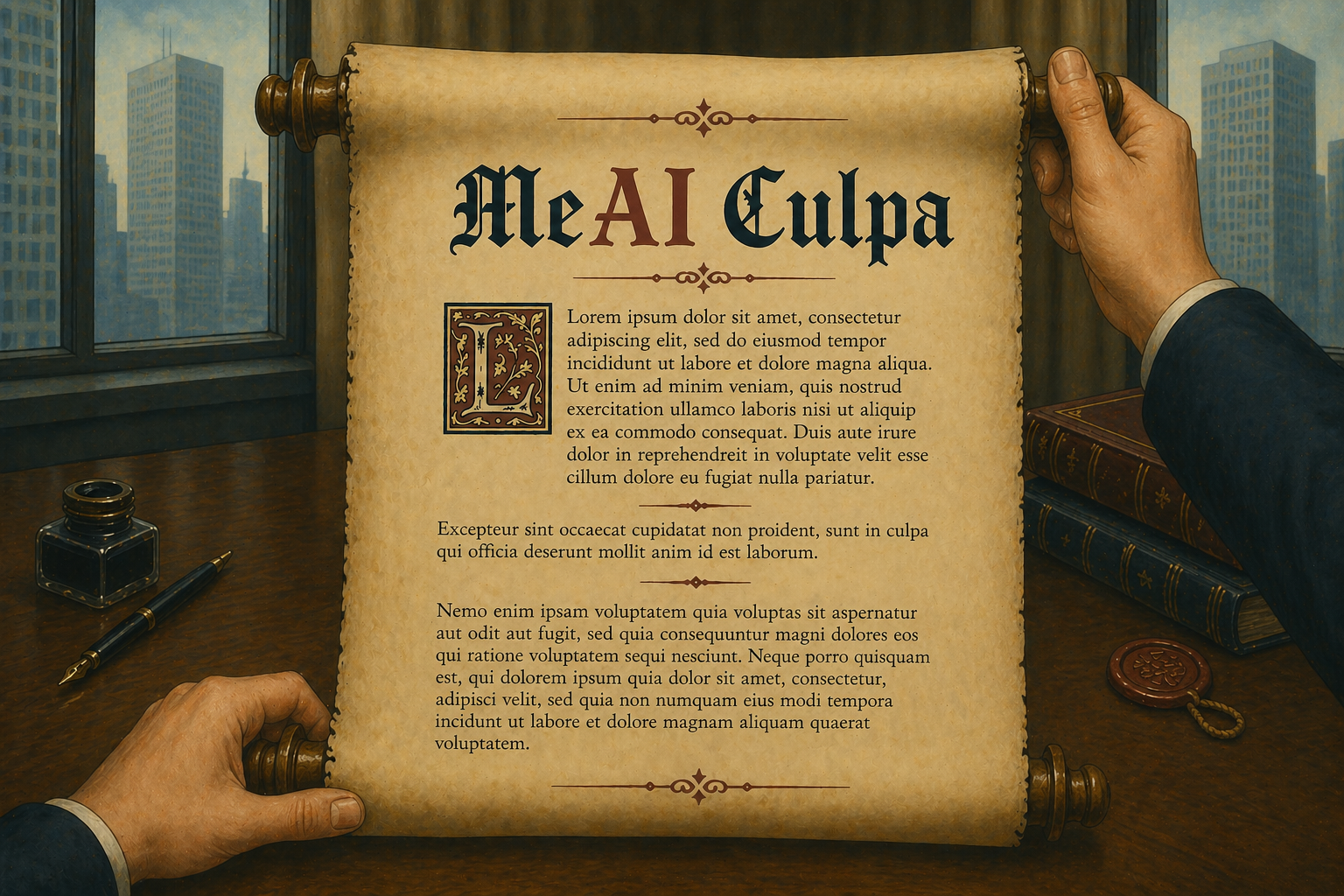
On April 18, Andrew Dietderich, senior partner and head of restructuring at Sullivan & Cromwell, sent a letter to Chief Judge Martin Glenn apologizing for a motion that contained inaccurate citations and other errors produced with AI. The attachment listing the errors ran three single-spaced pages, and opposing counsel had caught them before the firm did. To his credit, Dietderich signed the letter and named no one else.
Are Your Workflows Designed to Catch AI Hallucinations?
Sullivan & Cromwell, which advises OpenAI on the safe and ethical deployment of artificial intelligence, made the filing anyway. This deepens the embarrassment. Three years after the Avianca case first surfaced AI hallucinations in the profession, the legal technologist Damien Charlotin has logged more than thirteen hundred documented cases. The list includes the most selective and reputation-conscious firms in the profession.
AI Errors Are a System Outcome, Not a Fluke
Every organization makes mistakes. When using new technology such as AI, which appears magical, it’s easy to have unearned trust in the tools. What matters is how the mistakes are surfaced and dealt with.
Evidence-based management, as Jeffrey Pfeffer and Robert Sutton frame it, begins with the discipline of facing the hard facts. The hard fact here is that current operating practices are not catching these errors before the work goes out the door. Every system is perfectly designed to get the results it gets, as they say in the canon of quality management. Unless you change the design of the operating practices, you will continue to get AI hallucinations embedded in your work.
Who Catches Errors When You Don’t?
The Sullivan mistakes were surfaced by opposing counsel acting as an external quality check. In-house teams have no equivalent. When a defect occurs in-house, it goes straight into use.
An earlier post in this series, ABA Opinion 512 on AI | Five Questions GCs Should Be Able to Answer. Most Can't. argued that most legal departments cannot answer basic AI governance questions because they cannot see their own workflows. You cannot govern or improve a set of operating practices that you cannot see.
AI Governance Isn’t Optional—It’s Operational
Guardrails on what AI can do and produce, and verification of AI outputs, are either visible steps in the workflow, with a named owner and an auditable record, or they are assumptions held by people in a hurry. The Sullivan & Cromwell filing shows what happens with an unseen, ungoverned, and unaudited operating practice.
Lawyer In The Loop | AI Governance in the Workflow
One approach to addressing this problem is what mot-r calls Lawyer in the Loop. LITL treats AI governance and output verification as named workflow steps rather than assumed review, with logged actions and audit trails that attach to both the person and the tool.
Another three years of the same operating practices will produce another three years of AI hallucinations. In-house teams watching law firms from the outside have a chance to face the hard facts now, and redesign the operating practices that would otherwise produce the same headlines in their own departments.
Chime In. Be Heard.
If your team has started to formalize AI usage, introduced verification checkpoints, or rethought how work gets reviewed before it leaves the department — those experiences matter enormously to this community. What's working? What breaks under pressure? What would you redesign if you could start fresh? Share it below. The Legal Ops leaders who learn fastest right now will be the ones who build operating models that hold up — not just in calm conditions, but when the stakes are high and the timeline is short. Your insight might be exactly what someone else needs to move faster and avoid a costly mistake.
mot-r is the Legal Operating Layer for modern Legal Ops teams. Unlike traditional ELMs, CLM tools, or disconnected point solutions, mot-r provides a low-risk way to resolve the structural causes of legal overload—not just track matters after the fact. By bringing structure to legal intake and visibility to execution, mot-r helps legal teams improve service quality, regain capacity, and reduce burnout. The result is better decisions, higher-value legal service, and an operating model teams can sustain as demand grows.
