


Welcome to Legal Ops Briefs. Every idea has a history. These 3-minute reads trace the evolution of our thinking about legal operations, from early observations and practical lessons to the emerging Theory of Legal Operations. Read individually or as a collection, they document an ongoing effort to better understand how legal departments actually operate.

What Every GC's Sunday Sort Reveals About Legal Ops
A framework for what leaders should delegate, built for any executive's calendar, applies with unusual precision to a general counsel's week. Run it honestly and a second pile appears: the operational work no department ever built the capacity to receive.

There Is No Refreeze: Why Change Models Fail in Legal Ops
The classic change-management model assumes you can install a new way of working and have it hold. In legal, the ground never stops moving long enough for that to work — here's the operating model that replaces it.

Legal Ops Leaders: That Bottleneck in Your Intake Queue Isn't a Staffing Problem. It's a Diagnostic.
Friction in legal operations is usually read as failure — someone didn't respond fast enough, someone didn't follow the process. That reflex assigns responsibility and moves on. It also throws away the most useful information the friction was producing. A bottleneck, a bypass, a repeated question: each one is the operating system telling you where it's breaking down. The diagnostic is in the signal, not the person standing in front of it.

Your Legal Team's Single Point of Failure Has a Name and a LinkedIn Profile.
More than half of in-house lawyers are actively searching for a new position or open to one. Your legal team's heroic systems are running on people who are already preparing to leave — and the dependency holds together right up until one of them goes.

Your Legal Metrics Are All Looking Backward
Most legal reporting measures what already happened. Spend totals, contracts executed, settlements closed — each number is correct, and none of them tells you whether the function is healthy right now. This article examines why lagging indicators are structurally blind to present-state health, what Finance figured out decades ago that Legal hasn't applied, and what leading indicators actually look like inside a legal department.

For Lawyers, By Lawyers. Is That Good?
“For lawyers, by lawyers" describes who built the software. It does not address how the software performs for the department that has to use it. A practice credential is being asked to do the work of operational evidence — and that substitution is one a lawyer is trained to recognize.
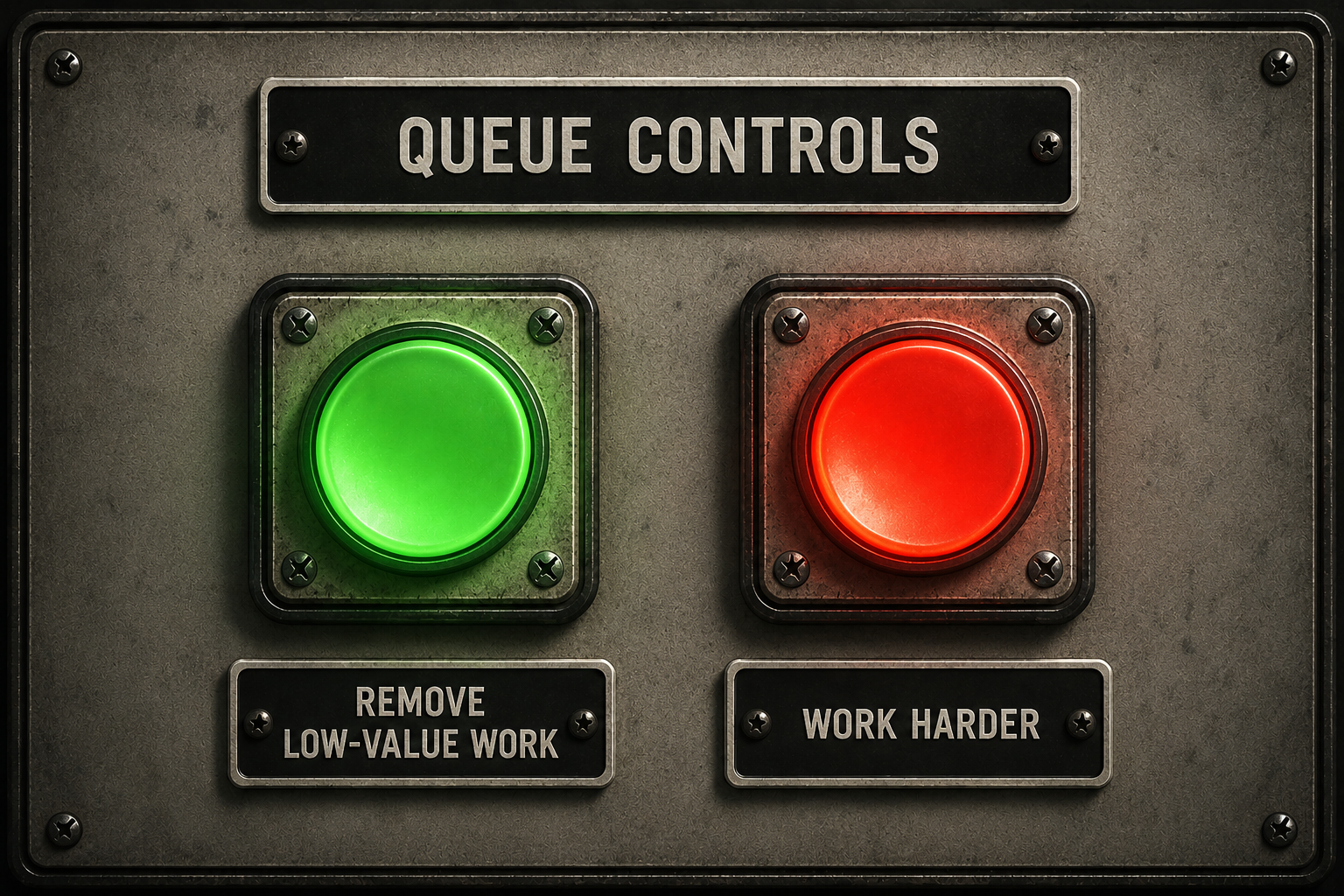
Little's Law and the Legal Backlog
In 1961, John Little published a five-page paper that established one of the most durable findings in operations science. The equation it proved — L = λW — gives any system, including a legal department, exactly two levers for reducing the work piled up in its queue. Most departments only pull one.

The Day in 13-Minute Fragments
Behavioral data shows knowledge workers are losing the ability to focus. Legal expertise runs on sustained attention. Legal ops is responsible for protecting it.
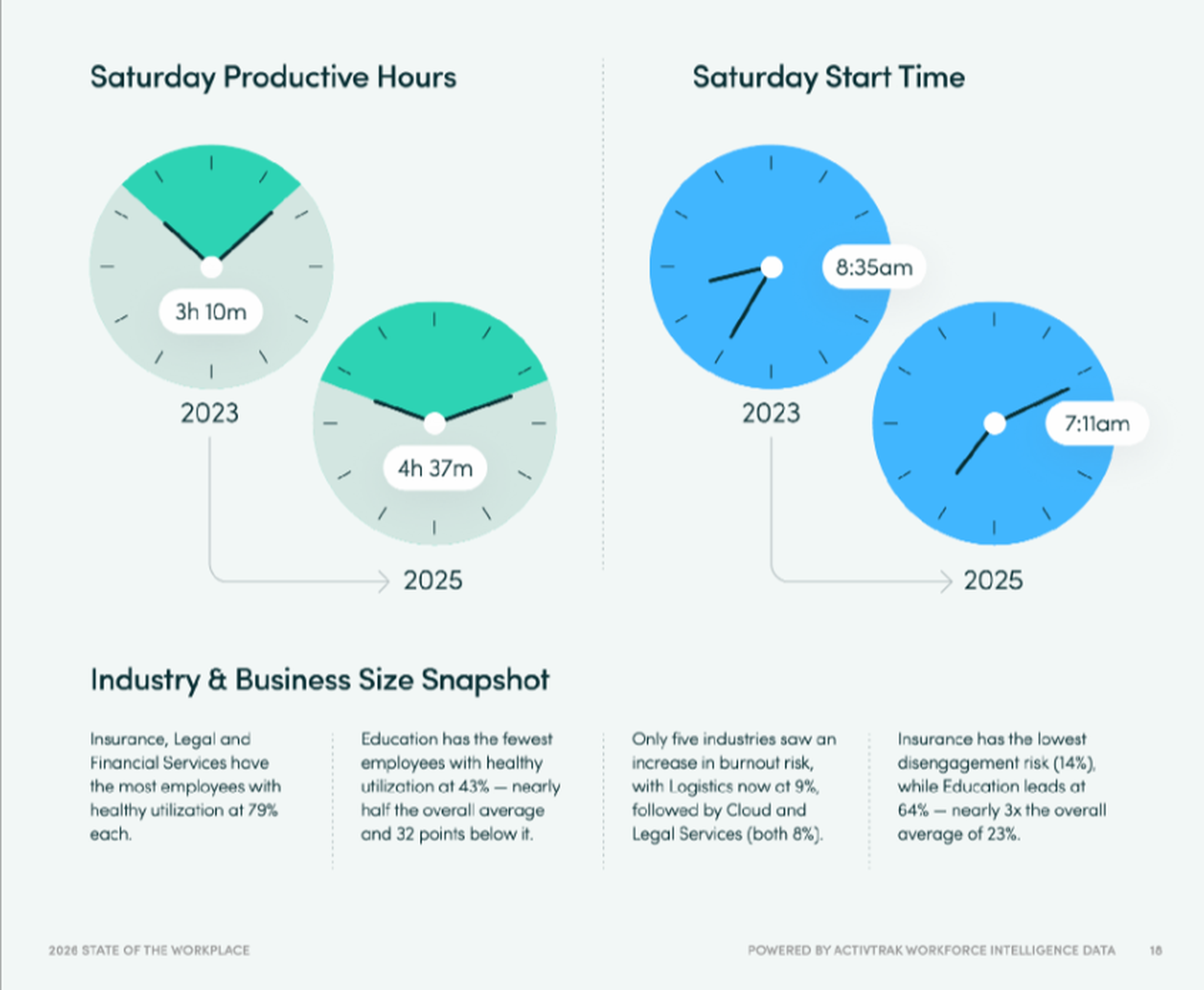
The Saturday That Starts at 7:11
Weekend work in legal departments is rising because the systems lawyers work inside were not built for current demand. Three years of behavioral data across 163,000 employees show Saturday productive hours up 46% and Sunday start times advancing by nearly 90 minutes. Workloads are rising, headcount is flat, and 87% of in-house counsel report too much time on work that doesn't require their training. This is a structural problem, not a productivity one.
AI Hallucinations Hit Elite Law Firm Sullivan & Cromwell
AI hallucinations just hit one of the world's most elite law firms. Over 1,300 similar incidents have been documented across the profession. The pattern isn't carelessness — it's workflow design failure.

Most GC Teams Think They're Operationally Mature. The Data Says Otherwise.
Most in-house legal teams believe they're operationally mature. Most aren't. There are four stages every legal team moves through — and the gap between where you think you are and where management thinks you are is the business case hiding in plain sight.

Fewer Matters, Less Noise. Or a Business Unit That Stopped Trusting Legal.
Legal teams measure what’s easy to report—not what actually predicts failure. Without early signals, problems don’t surface until relationships break, work disappears, or risk is already in motion.
ABA Opinion 512 on AI | Five Questions GCs Should Be Able to Answer. Most Can't.
In a 2024 survey, 83% of in-house lawyers reported using AI tools their company didn't provide. Every respondent acknowledged the risk. Most legal departments still can't answer the five questions ABA Opinion 512 says they should be able to answer. The reason is structural.

And Then What? Why Smart Legal Decisions Still Create Bigger Problems.
Most legal decisions optimize for the immediate outcome. But second- and third-order effects are where performance breaks down—or improves. If you’re not asking “and then what?”, you’re missing the real impact.

What is the Task? The Question That Exposes Why GCs Keep Missing the Mark.
Legal isn’t failing from lack of effort—it’s failing from lack of clarity. When the task isn’t defined, low-value work takes over and real capacity disappears.

Legal Team Suffering Is Cost. (With a 7-Figure Multiplier)
Legal team stress isn’t just a culture problem — it’s a measurable financial cost. From turnover to disengagement, the data shows how burnout quietly drains millions from legal departments.

Under-Resourced, But Not Under-Staffed | GC’s Headcount Reflex
Most overwhelmed legal departments ask for more people. But the lawyers inside the work say something surprising: the real problem isn’t headcount. It’s how legal work enters the department—and who ends up doing it.

GCs Are Inside The Doom Loop
General Counsel are inside the doom loop too: more risk, less influence, and cost as the primary scorecard. When governance metrics distort value, Legal Ops must change the frame.

Why Your Legal Department Has a Reputation Problem It Can’t See
When 67% of employees bypass legal, it’s not a people problem — it’s a systems problem. Here’s what Legal Ops leaders need to see.

The Suffering Has Gone Quiet
The quiet crisis in legal departments isn’t loud burnout—it’s structural erosion. Here’s what the evidence says Legal Ops leaders can do differently.