

FOR IN-HOUSE LEGAL TEAMS
Most operational waste begins before Legal begins work.
Every request must be captured, understood, validated and allocated before anyone can do meaningful legal work.
When those steps happen inconsistently, lawyers spend their time chasing information, correcting requests and redirecting work instead of solving legal problems.
mot-r Q gives every request the same operational lifecycle: capturing complete information, validating it, allocating it correctly and initiating the right workflow before work begins.

Information flows both ways.
The business requests support from Legal. Legal requests information from the business.
Whether information is entering or leaving the legal department, every interaction benefits from complete information, intelligent routing and a consistent process.
Business → Legal
COMMON REQUESTS
- Contract Review
- NDA
- Employment Agreement
- Legal Advice
- Privacy Review
- Marketing Approval
- Procurement Support
Legal → Business
COMMON REQUESTS
- Conflict Disclosures
- Code of Conduct
- Policy Acknowledgements
- Expense Attestations
- Security Certifications
- Regulatory Declarations
- Annual Certifications
Every one of these starts exactly the same way.
Complete, structured information.
The right questions.
Consistent validation.
Intelligent routing.
Only then does the work begin.
Requests for information can become evidence too.
When Legal asks the business for a policy acknowledgement, a disclosure or a certification, each response stays connected to the obligation or workflow that required it. Legal can see who has responded, who hasn't, and what was confirmed, without chasing it down or rebuilding the record later.
Not every request requires legal judgment.
In many legal departments, every request competes for the same lawyers' attention, regardless of whether legal judgment is actually required.
Some can be resolved automatically. Others belong with Legal Operations, Procurement or HR. The remainder require legal judgment.
The goal isn't for lawyers to handle every request. It's to ensure every request is handled at the appropriate level of expertise.
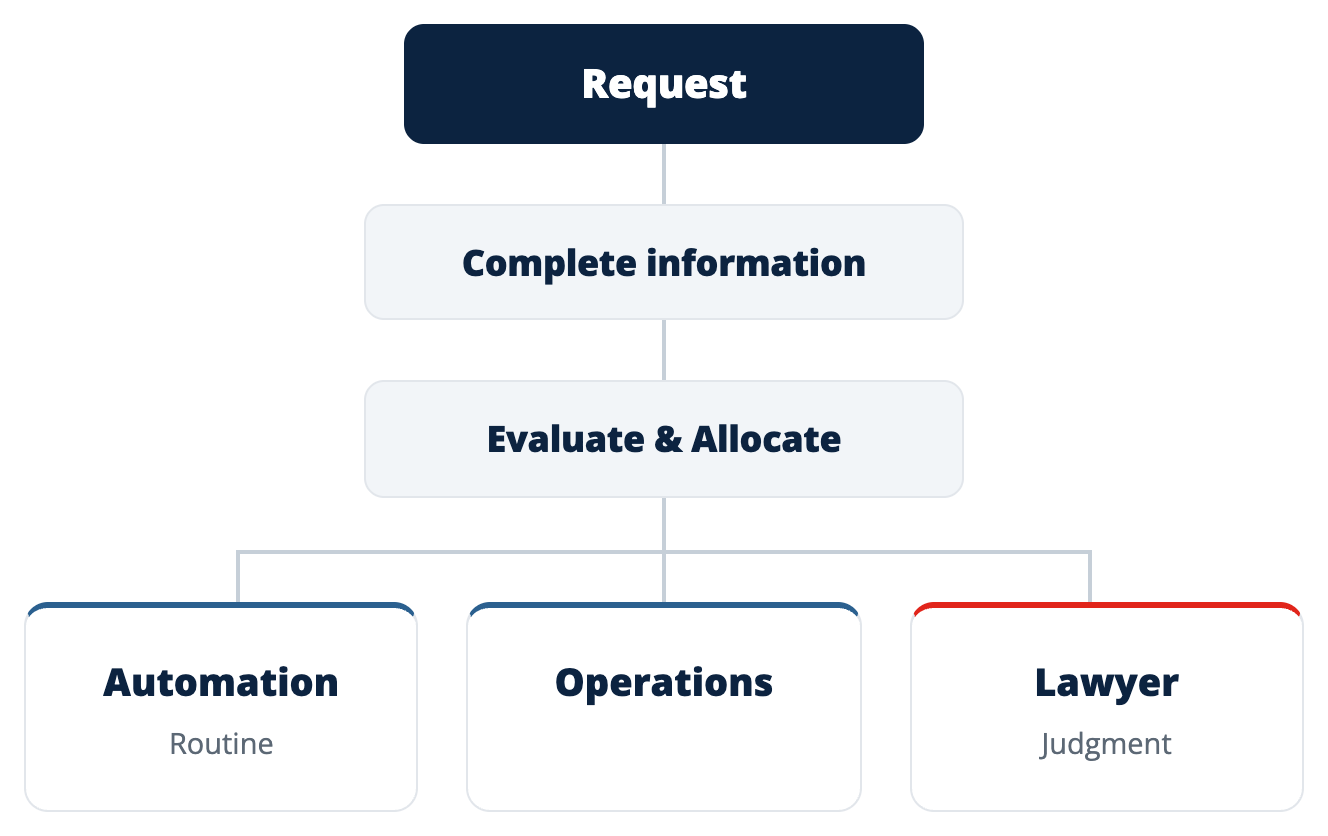
mot-r Q improves every stage before work starts.
Every request follows the same operational lifecycle.
Capture
Every request begins with the information needed to act.
- Guided conversations
- Required information
- Supporting documents
- Plain-language guidance
Validate
Ensure requests are complete before work begins.
- Required responses
- Business rules
- Duplicate detection
- Data validation
- Operational evidence
Allocate
Send every request to the appropriate level of expertise.
- Intelligent routing
- Team assignment
- Escalation rules
- Notifications
Initiate
Start the right operational process immediately.
- Launch the appropriate workflow
- Create the required records
- Generate documents automatically
- Notify the right people
- Connect existing systems
The evidence starts when the work does.
The original request, the information supplied, the validation performed, the routing decision, who is responsible and the workflow initiated all become part of the operational record from the moment work enters Legal. Nothing has to be reconstructed later, and every cycle gives Legal better evidence to improve the next one.
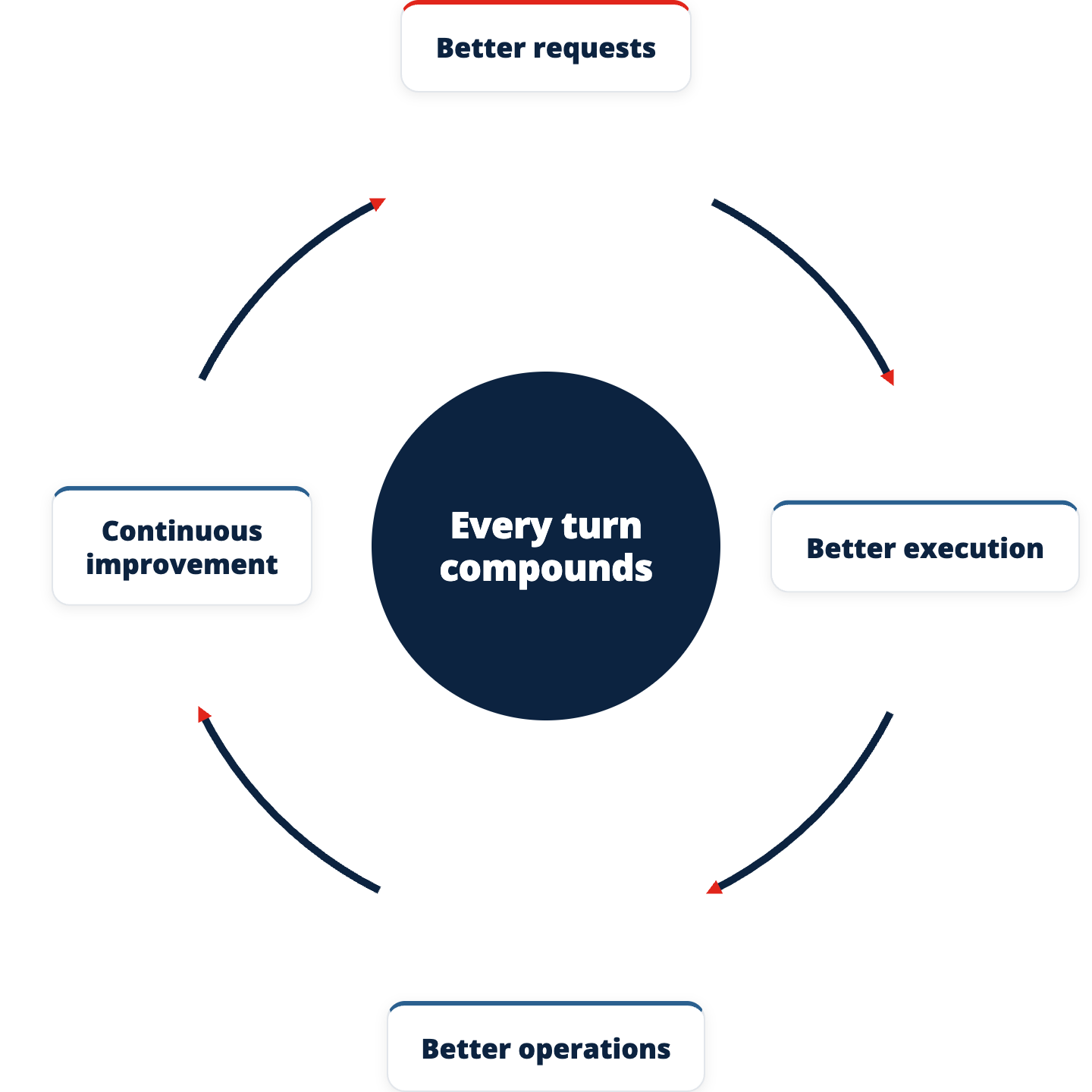
Prove it in 60 Days.
Choose one of your real workflows. We'll configure it with your people and processes and agree in advance how success will be measured: cycle time, work in progress, stale work and first response time. Judge the evidence before you make a broader commitment. Expand from there only if it makes sense.