

Customer-Aligned ELM
For legal teams suffering with more work, more risk, and high-friction operations — and done with vendors whose incentives end at deal signature.
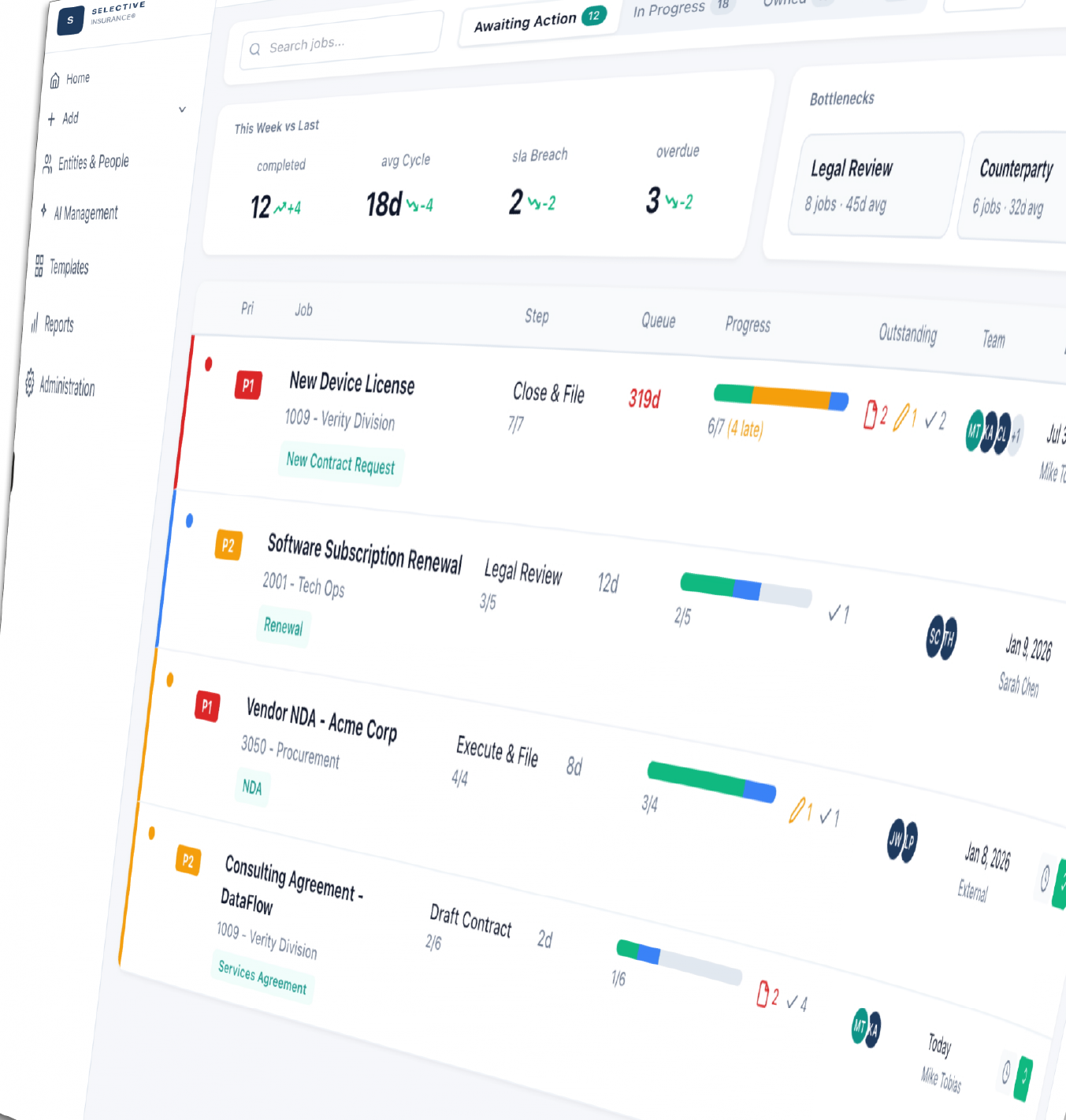


Management Wants versus Legal Needs
Management sees legal as a cost center. They want better service, faster turnaround, and clearer visibility—without proportional increases in headcount or spend.
But your Legal team is already stretched. More demands without more support means longer hours, mounting backlogs, and eventually burnout and turnover.
The Bottleneck is Almost Never the People
The question worth asking first: is this a capacity problem, or a friction problem? The answer changes what you actually need.
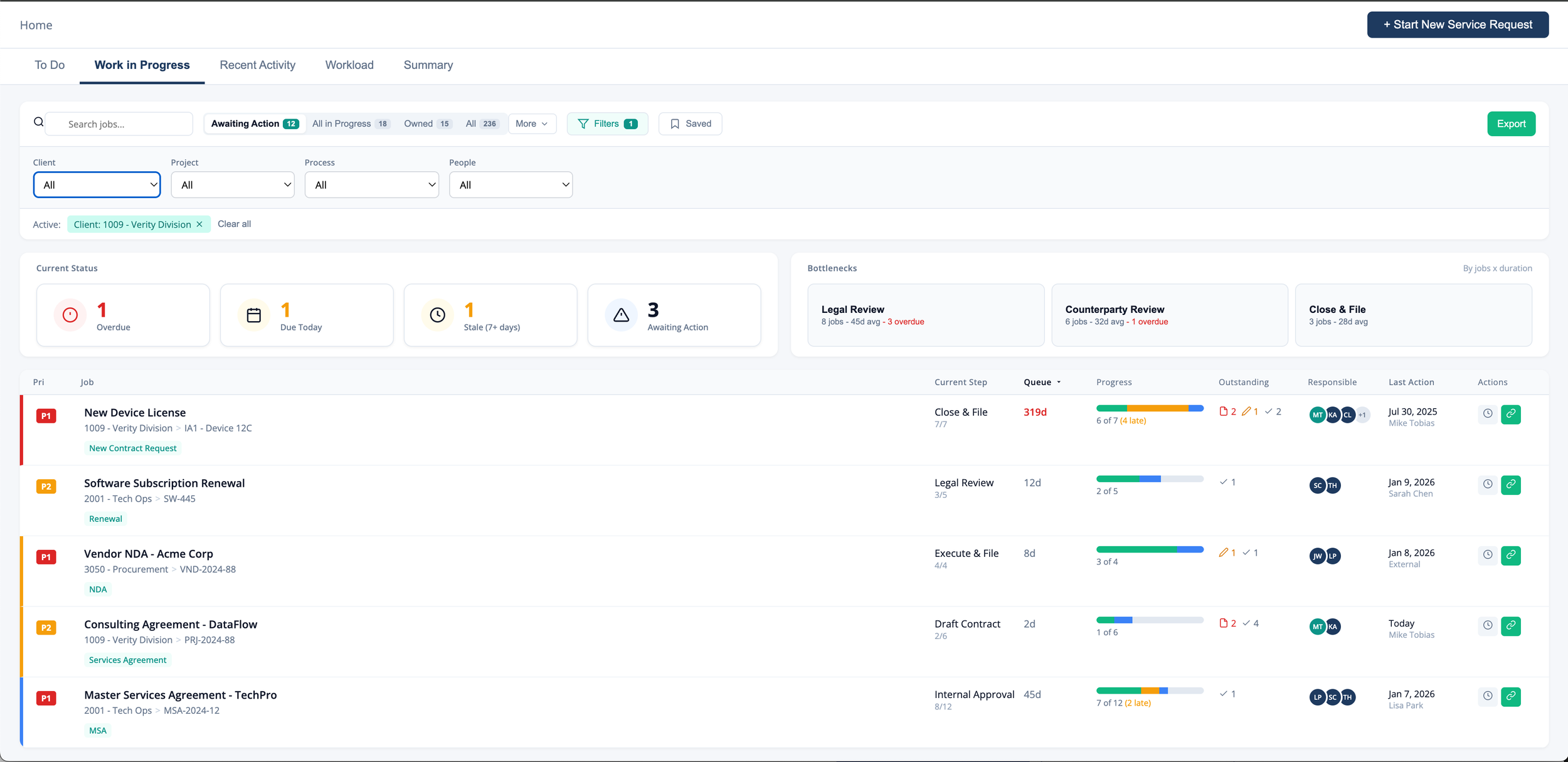
mot-r is the operations layer that aligns demand, capacity, and execution. One platform for intake, tracking, workflows, and reporting—configured by Legal Ops, not IT.

How to Evaluate any ELM Platform
Before you evaluate any ELM platform, ask these four questions:
Does it require IT to configure and maintain, or can Legal Ops own it directly?
Does it have a unified codebase, or was it assembled through acquisitions?
What happens to your data and workflows if you need to leave?
How long before the first workflow is live — weeks or months?
These questions will disqualify most of the field. That's the point — whatever you decide.
What Changes for Management? What Changes for Legal?
ManagementGets Visibility and Throughput
Real-time visibility into workload, status, and throughput
Faster response times without adding headcount
Legal Gets Clarity and Sustainable Workloads
Single source of truth for every matter and task
Fewer interruptions—no more status-chasing
Clear priorities so the right work gets done first
Sustainable workload that reduces burnout
What does capacity recovery actually look like in your context?
The admin burden in most legal teams is invisible until you add it up. Status-chasing, manual tracking, duplicate data entry, context-switching between tools — it compounds across every person on your team, every week.
Put your own numbers in. The result is what you're spending on friction that doesn't have to exist. Adjust the slider to explore the impact of your recoverable capacity assumptions.
For context: across our current customers, average recovery runs 450 hours/year per team.
Calculate Your Recoverable Capacity
Use 30–40% as a conservative planning range.
Adjust the slider down if you want to stress-test the case.

What to Verify Before You Commit
No 12-month implementation.
Ask us for the implementation timeline from our last five customers. We'll show you the actual dates.
No IT dependency.
Request a configuration walkthrough. If Legal Ops can't do it without calling IT, you'll see it in 20 minutes.
No Frankenstein-ed Product Dev
Ask any vendor how many acquisitions went into their product. Then ask to speak with someone who was there at the start. The answer will be clarifying — for any platform you evaluate.
No Vendor Lock-In.
Ask to see the contract exit clause before you sign anything. Ours is in Section 7. We'll send it now.
Insights for Legal Ops Leaders
Short reads and research for Legal Ops leaders focused on visibility, efficiency, and reducing burnout.


These are the questions worth asking before you spend another hour evaluating vendors:
Do you have a specific workflow in mind that's causing the most pain today?
Has a previous legal tech implementation failed, and do you know why?
Who internally needs to champion this? — And do they have the standing to do it?
If you can answer all three, you're ready to evaluate. If you can't, those are the conversations to have first — and we're happy to help you have them, with no agenda.
Is this the Right Decision for Your Team Right Now?
mot-r is right fit if:
You need ELM capabilities but lack the time for an Old-School 12-18 month implementation
You don't have dedicated IT support for Legal
You want to prove value before making a significant commitment
You've been burned by legal tech that didn't deliver
You're wary of PE-backed vendors and their incentives
You need a platform that adapts as your organization changes
You're interested in AI but want to adopt it on your own timeline
We’re probably not the right fit if:
You're looking for a narrow point solution rather than a platform
You have robust IT dedicated to Legal and prefer that model
You need a vendor your board has heard of, even if it's not the best fit
That's okay. We'd rather know now than waste each other's time.
From intake to AI governance — see the full capability set
Are We The Right Fit?
GenAI will transform legal work. It will also create real risks—competence, confidentiality, supervision. Most vendors are racing to ship AI features. We took a different approach.
Our Lawyer-in-the-Loop AI (LITL) is additive, not mandatory. Your workflows run without AI. When you're ready, AI enhances them—no rebuild required. Use any LLM. Swap models as the market evolves. Maintain full governance, human oversight, and audit trail.
AI works when it has clean data, structured knowledge, and well-defined process.
AI-Ready When You Are
Proof of Concept
If the numbers and the questions point in the same direction, the next step is straightforward.
We'll build a proof of concept using one of your actual workflows. You define the success metrics. We build it. You decide if it works — before any significant commitment.
No 12-month contract to sign before you see results. No IT project to kick off. Just one workflow, running in your environment, with defined outcomes and a clear timeline.
We're probably not the right fit for every team — and that's fine. If you're not sure yet, the evaluation questions above are the right place to start.